


Remembering the first Memorial Day
Posted May 26th, 2014 by James DeWolf PerryCategory: History Tags: Charleston S.C., Emancipation to Equality, Memorial Day, South Carolina, U.S. Civil War
In honor of Memorial Day, we are reposting this blog entry from last year, which recounts how the first Memorial Day was celebrated by free black troops and civilians in Charleston, S.C. at the end of the Civil War.
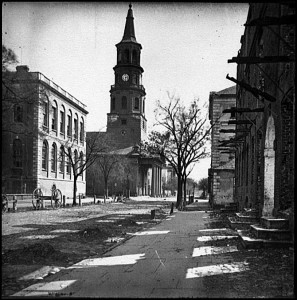 As we pause today to remember the nation’s war dead, it’s worth remembering that Memorial Day was first celebrated by black Union troops and free black Americans in Charleston, South Carolina at the end of the Civil War.
As historian David Blight recounts in his masterful book, Race and Reunion: The Civil War in American Memory (2001), Charleston was occupied by Union troops in the spring of 1865, most white residents having fled the city. In this atmosphere, the free black population of Charleston, primarily consisting of former slaves, engaged in a series of celebrations to proclaim the meaning of the war as they saw it.
The height of these celebrations took place on May 1, 1865, on the grounds of the former Washington Race Course and Jockey Club, an elite facility which had been used by the Confederates as a gruesome prison and mass grave for unlucky Union soldiers. Following the evacuation of Charleston, black laborers had dug up the remains of Union soldiers, given them a proper burial, and built the trappings of a respectful cemetery around the site to memorialize their sacrifice.
 Yesterday, we reported on our
  This year, to commemorate the life of Dr. Martin Luther King, Jr., I was invited to speak at
 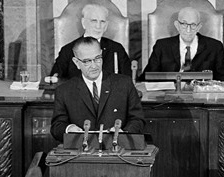 Today is the 50th anniversary of the War on Poverty.
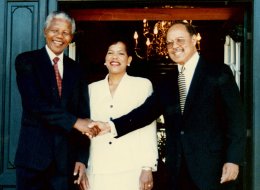 Ambassador James A. Joseph is a member of the Tracing Center’s board of directors who first met Nelson Mandela when they shared a dais in Washington, D.C. during Mandela’s first visit to the United States in 1990, and who served as U.S. ambassador to South Africa when Nelson Mandela was president.
 Diversity experts often recommend that employers foster a variety of behaviors in racially diverse workplaces aimed at bringing employees closer together. These techniques can include hosting social gatherings and encouraging the informal sharing of personal information, and are intended to overcome racial and sociocultural barriers and to strengthen interoffice relationships.
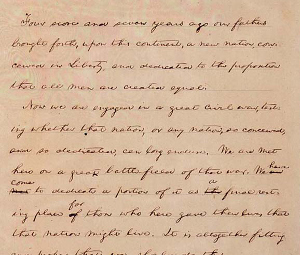 Now that much of the hullabaloo surrounding the 150th anniversary of the Gettysburg Address has died down, perhaps we can finally ask ourselves: what really was the enduring significance of Lincoln’s famous oration?
