Growing up in Nashville, Tenn., my sister and I spent hours on end listening to Mary Chapin Carpenter, Faith Hill, the Dixie Chicks, and other female country artists of the 1990s. With this soundtrack I came to believe all country music was about falling in love, getting treated badly by men, hating other women, and finding revenge. As a child I had no idea how many people in America associate country music with “Southern Pride” and the complex issues of race, history and identity that term entails. I only knew Confederate flags were bad. One of my best friends from elementary school, the daughter of a prominent African-American author and songwriter, told me the flags meant people wanted to bring slavery back. Naturally I henceforth regarded it with revulsion and fear.
When Brad Paisley begins his song “Accidental Racist” by saying his confederate flag t-shirt only means he’s a Skynyrd fan, I can’t help noticing how he disproves his entire point in the following verses of the song. He calls himself “a proud rebel son” and “a white man livin’ in the southland” and admits how he is unable to understand southern history from a black perspective. He understands how the confederate flag is offensive and yet still brandishes it across his chest out of a sense of pride in a past he knows was at least partially wrong.
Some lines in the Brad Paisley/LL Cool J collaboration are worthy of some praise for their apparent thoughtful consideration of how to remember the past whilst “caught between southern pride and southern blame.” Paisley is not proud of everything past generations of done, and he knows the nation is still “paying for mistakes that a bunch of folks made long before we came.” But despite this acceptance of the past as imperfect, both Paisley and LL Cool J express a disturbing desire to let bygones be bygones, sweep history under the rug, and attempt to solve the problems of today without engaging with the traces of the trade. Brad Paisley’s aversion to “walking on eggshells” reminds me of statements I’ve heard white southerners make when they don’t want to talk about slavery because they feel they can’t express opinions they know to be offensive or hurtful. For these people, avoiding the eggshells is an excuse for ignoring the issue all together.
Like Paisley and Cool J, “I just want to make things right,” which is why I study the history of the slave trade and work at the Tracing Center. I am a southerner with a strong sense of pride towards my region and my identity, but I refuse to let the Confederate flag be the symbol of that pride. I am proud of bluegrass music, Harper Lee, Alex Haley, Ray Charles Mardi Gras, and cornbread. I am proud of the accomplishments of the Civil Rights Movement and less proud of how long it took us to get there. If our shame is located in our history, our pride can be found in how we engage with the traces of that history today. I therefore wholeheartedly disagree with the “Accidental Racist” verse, “the past is the past, you feel me,” and encourage country music fans everywhere to think critically about the problems in this song (aside from its melody and tempo, which are also worthy of criticism).
The Tracing Center on Histories and Legacies of Slavery is seeking a summer intern in the Boston area to work on issues of racial justice. Project assignments can be tailored to the intern’s interests and experience, but possibilities include research on issues related to the history and legacy of racial discrimination, design of educational and civic dialogue programs, social media and public relations outreach, fundraising initiatives, video production, and event management.
Applicants should have an interest in social justice, especially racial justice, and may also be interested in non-profit outreach and advocacy, education issues, communities of faith, the use of film for social advocacy, or public history.
This post is about Combined Destinies: Whites Sharing Grief About Racism (2013), a new book we haven’t read yet at the Tracing Center, but which we learned about this weekend from author Sharon Morgan and which we’re eager to get our hands on.
(Sharon, for those who don’t know, is co-author, along with Tom DeWolf, of Gather at the Table: The Healing Journey of a Daughter of Slavery and a Son of the Slave Trade.)
Combined Destinies, edited by Ann Todd Jealous and Caroline Haskell, is an anthology exploring the impact of racism on the lives of white people. The authors, both psychotherapists with experience facilitating dialogue on race, seek to begin a conversation about the impact on white people of the racist ideology created by their ancestors, in order to advance anti-oppression work and to contribute to individual and societal healing.
The book’s chapters focus on issues such as guilt, shame, and silence in the lives of white Americans, and are written for a wide audience, including lay people as well as counselors and mental health professionals. The chapters include the words of white people telling their own stories, often for the very first time.
Pornography isn’t the typical context within which we examine the contemporary legacy of race in the United States, but I think it can be—if you’ll pardon the pun—quite revealing.
The Daily Beast has posted an article which asserts that race is one of the final frontiers in the pornography industry, under the title “Interracial Sex Still Taboo for Many Porn Stars.”
The premise of the article is captured by this comment from “award-winning porn star Kristina Rose”: “Racism exists, and it exists in porn.”
Update: The A.P. is reporting, several hours after its story was first published, that the Confederate flag will be taken down this weekend.
The Associated Press is reporting this afternoon that a Confederate battle flag has been hanging in the House chamber in the old North Carolina State Capitol since last week.
The flag is hanging as part of an historical display, according to State Historic Sites Director Keith Hardison, and should be viewed in that context. Hardison, who is also a Civil War re-enactor, has close ties to the Sons of Confederate Veterans, which has led efforts throughout the South to rehabilitate the image of the Confederate flag as a symbol of southern heritage.
The Confederate flag is controversial because it invokes the horrors of slavery and Jim Crow for some, while others believe it symbolizes their southern heritage. Historian David Goldfield, author of Still Fighting the Civil War: The American South and Southern History (2002), acknowledges both perspectives but argues that the flag cannot be divorced from its racist past:
The history of the Confederate battle flag, how it was designed and formulated, how it has been used through the years, clearly states that it is a flag of white supremacy.
I know current Sons of Confederate Veterans would dispute that, saying ‘Hey, I’m not a racist.’ But the fact remains that the battle flag was used by a country that had as its foundation the protection and extension of human bondage.
Historian Paul Finkelman writes at The Root about the discovery of a sixth-grade reading comprehension test, online from the Massachusetts Department of Education, which reiterates the old myth that coded quilts were used to warn runaway slaves along the Underground Railroad.
This old legend, about coded messages in quilts which told escaped slaves of safe houses and routes to freedom, is common in the United States. Historians agree, however, that there is no truth to these detailed assertions; as Finkelman puts it, this myth has long been known to be “totally fabricated.” Nevertheless, the story of coded slave quilts has frequently been written about as truth, and the story often appears in the interpretation of slavery for the public at historic sites.
This is an appealing myth for many Americans, blending as it does the horrors of slavery with the bravery of the enslaved, who are seeking their own freedom; in some versions of the story, the quilts are even made and displayed by progressive white southerners, doing their part to fight the injustice of their society.
At the Tracing Center, we believe strongly in the importance of separating truth from fiction in conveying the history of slavery to the general public. Myths like that of the slave quilt never contribute to a better understanding of this history or its legacy today, and often exist precisely because they serve to obscure historical realities that would otherwise challenge comforting notions that keep us from deeper understanding of our heritage and its consequences.
Today is Reparations Awareness Day, a day that has been designated for more than a decade to promote reparations for slavery in the United States.
What do you think? Should reparations be offered for the nation’s history of slavery and racial discrimination? Why or why not?
Background
February 25 was originally designated as Reparations Awareness Day by N’COBRA, the National Coalition of Blacks for Reparations in America, following a series of demonstrations organized by the group in the early 1990s. The occasion has since been formally recognized by a variety of organizations, including the New York City Council, churches, and institutions of higher education.
Today marks only the second time that Inauguration Day has coincided with our national holiday commemorating the life of Martin Luther King, Jr., and on this occasion, our first black president will be taking the oath of office for the second time.
Here is what I hope the president will include in his second Inaugural Address:
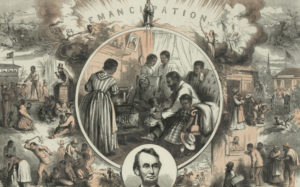
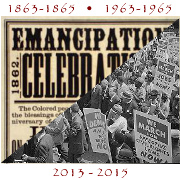
This year marks the coming together of two powerful anniversaries, the 150th anniversary of the Emancipation Proclamation and the 50th anniversary of the March on Washington and King’s “I Have a Dream” speech.
Today, 50 years after the civil rights movement and 150 years after the end of slavery, we have come a long way towards realizing the visions of Lincoln and King for a more just and inclusive society. Yet the legacies of slavery and race—the unfinished business of Civil War and civil rights—remain a crisis in our nation.
Philosopher Stephen T. Asma is causing quite a stir these days with his new book, Against Fairness.
The crux of Asma’s argument is that favoritism, and not fairness or egalitarianism, ought to guide our morality and our civic life. His philosophy welcomes such modern, democratic values as compassion and the fight against prejudice, while urging us to reject liberalism’s belief in meritocracy and the equal worth of all persons. Instead, Asma would have us embrace our instinct to prefer, and to preferentially support, the members of our “tribes”—those we feel close to by reason of blood, social relationships, or such markers as religion, social class, or cultural affinity.
This philosophical approach represents a major challenge to those who believe that our society can, and should, work to overcome bias of all kinds, expanding the circles1 of those we consider “us” until we become, as Asma puts it, “one giant tribe.”
Today Slate shared with their readers an historical map depicting the incidence of lynching in the United States during the years 1900-1931.
This map, offered by Slate through its new history blog, “The Vault,” was originally compiled by researchers at the Tuskegee Institute, under the leadership of Booker T. Washington.
The map is a dry, statistical compilation of death at the hands of communities across the country: