

“The Meaning of July Fourth for the Negro”
Posted July 4th, 2013 by James DeWolf PerryCategory: History Tags: Emancipation to Equality, Fourth of July, Frederick Douglass, Independence Day, James Earl Jones, Mass Humanities, slavery
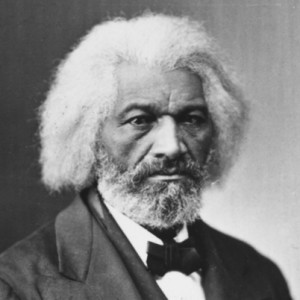 It is always worth making time, on the Fourth of July, to remember those people and movements whose courage and sacrifice advanced and improved upon the ideals on which the United States was founded. This is true even for those which may have seemed radical, subversive, or even unpatriotic at the time.
In that light, we highly recommend the Fourth of July oration delivered by abolitionist Frederick Douglass in Rochester, N.Y. on July 5, 1852, entitled “The Meaning of July Fourth for the Negro.” ((Our thanks to Mass Humanities, among others, for laboring diligently to make this speech, and its spirit, an integral part of our Independence Day celebrations each year.))
The following brief excepts from Douglass’ speech illustrate not only his burning hatred for slavery and his withering scorn for those who would not extend the nation’s liberty to all its children, but also his praise for all that is good in the American experiment, and his optimism for the future:
Read the rest of this entry »
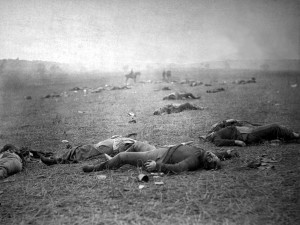 What, to the slave and to free blacks, was the Battle of Gettysburg? ((The title and first line of this essay are a paraphrasing of Frederick Douglass’ famous line, “What, to the American slave, is your Fourth of July?”, in his 1852 July 4th address, “The Meaning of July Fourth for the Negro,” in Rochester, N.Y.))
 Fifty years ago today, on June 29, 1963, the city of Birmingham, Alabama re-opened its municipal golf courses, making them available for the first time to both white and black citizens.
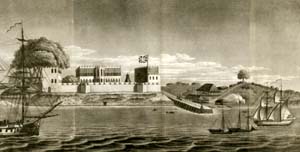 Recently uncovered historical evidence shows that the family of George H.W. Bush and George W. Bush has something in common with the DeWolf family of
 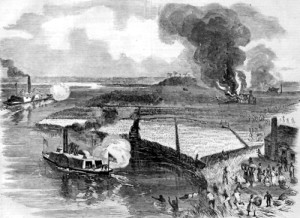 One hundred and fifty years ago today, Union forces led by Harriet Tubman and Colonel James Montgomery engaged in a daring and wildly successful raid up the Combahee River in South Carolina.
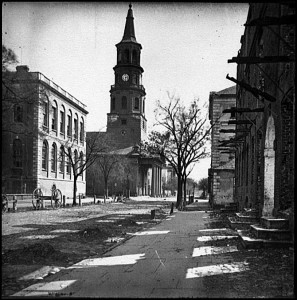 As we pause today to remember the nation’s war dead, it’s worth remembering that Memorial Day was first celebrated by black Union troops and free black Americans in Charleston, South Carolina at the end of the Civil War.