


“The Meaning of July Fourth for the Negro”
Posted July 4th, 2014 by James DeWolf PerryCategory: History Tags: Emancipation to Equality, Fourth of July, Frederick Douglass, Independence Day, James Earl Jones, Mass Humanities, slavery
 This post was originally published on July 4, 2013 and is reposted today in commemoration of Independence Day, in all its meanings.
It is always worth making time, on the Fourth of July, to remember those people and movements whose courage and sacrifice advanced and improved upon the ideals on which the United States was founded. This is true even for those which may have seemed radical, subversive, or even unpatriotic at the time.
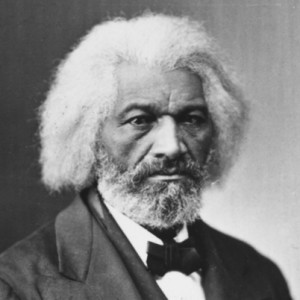
In that light, we highly recommend the Fourth of July oration delivered by abolitionist Frederick Douglass in Rochester, N.Y. on July 5, 1852, entitled “The Meaning of July Fourth for the Negro.” ((Our thanks to Mass Humanities, among others, for laboring diligently to make this speech, and its spirit, an integral part of our Independence Day celebrations each year.))
The following brief excepts from Douglass’ speech illustrate not only his burning hatred for slavery and his withering scorn for those who would not extend the nation’s liberty to all its children, but also his praise for all that is good in the American experiment, and his optimism for the future:
Read the rest of this entry »
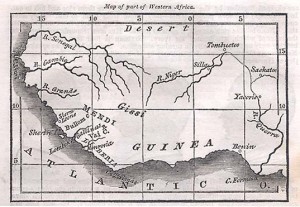 Today is the 175th anniversary of the Amistad revolt. In the United States, attention understandably focuses on the trial of the enslaved Africans who seized control of the ship from its crew, since the legal proceedings took place in this country.
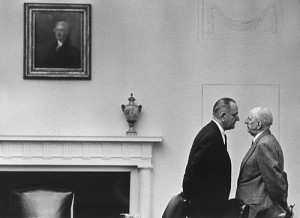 Fifty years ago today, the U.S. Senate passed the landmark Civil Rights Act of 1964, after ending the longest continuous debate in Senate history.
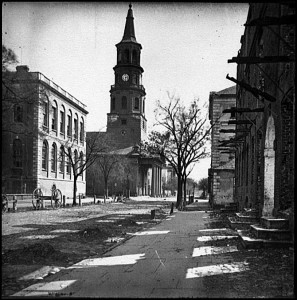 As we pause today to remember the nation’s war dead, it’s worth remembering that Memorial Day was first celebrated by black Union troops and free black Americans in Charleston, South Carolina at the end of the Civil War.
 This year, to commemorate the life of Dr. Martin Luther King, Jr., I was invited to speak at
 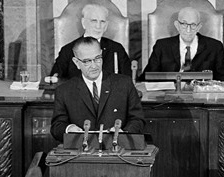 Today is the 50th anniversary of the War on Poverty.
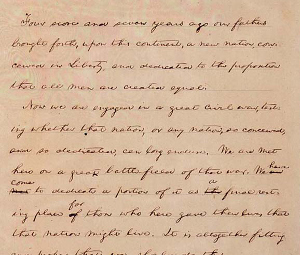 Now that much of the hullabaloo surrounding the 150th anniversary of the Gettysburg Address has died down, perhaps we can finally ask ourselves: what really was the enduring significance of Lincoln’s famous oration?
