


What does the Court’s decision on affirmative action mean?
Posted June 24th, 2013 by James DeWolf PerryCategory: Living consequences Tags: Affirmative action, U.S. Supreme Court, University of Texas
The U.S. Supreme Court has finally issued its ruling in this year’s affirmative action case, Fisher v. University of Texas at Austin, voting 7-1 to send the case back to the Court of Appeals for further review.
The Court’s decision upholds, at least for now, the use of race as a factor in admissions, while applying a more skeptical analysis than the lone dissenting justice, Justice Ginsburg, believes is appropriate. (Justice Kagan recused herself and took no part in the case.)
The majority opinion, authored by Justice Kennedy and supported by the other six justices, holds that the Fifth Circuit failed to properly ask whether the university’s use of race in its admissions policy meets the standard of “strict scrutiny,” the especially demanding standard which applies to the use of race in governmental actions.
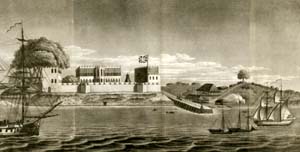 Recently uncovered historical evidence shows that the family of George H.W. Bush and George W. Bush has something in common with the DeWolf family of
 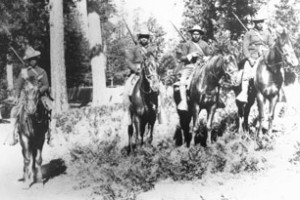 On Monday, the U.S. House of Representatives passed H.R. 520, the “Buffalo Soldiers in the National Parks Study Act,” which would study ways for the National Park Service to commemorate these black troops and their historic role in the post-Civil War era.
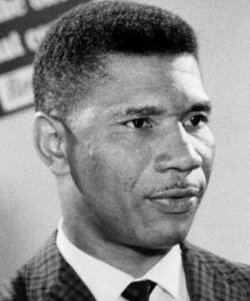 Yesterday, I wrote here on the 50th anniversary of one of the most momentous days in the history of the civil rights movement.
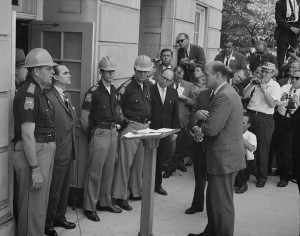 On the morning of June 11, 1963, Governor George Wallace of Alabama personally and physically intervened, in front of television cameras, to attempt to block the desegregation of the University of Alabama in Tuscaloosa.
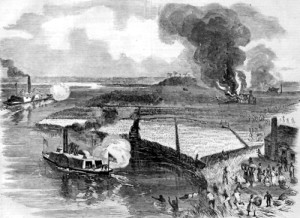 One hundred and fifty years ago today, Union forces led by Harriet Tubman and Colonel James Montgomery engaged in a daring and wildly successful raid up the Combahee River in South Carolina.
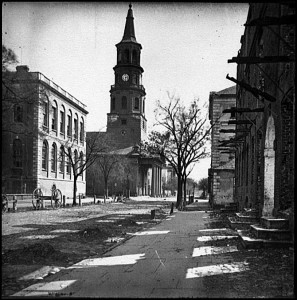 As we pause today to remember the nation’s war dead, it’s worth remembering that Memorial Day was first celebrated by black Union troops and free black Americans in Charleston, South Carolina at the end of the Civil War.
