
The Tracing Center on Histories and Legacies of Slavery builds on the work of Ebb Pod Productions, which produced the documentary film, Traces of the Trade: A Story from the Deep North.

Our mission is to create greater awareness of the vast extent of complicity in slavery and the transatlantic slave trade and to inspire acknowledgment, dialogue and active response to this history and its many legacies. We do this for the purpose of racial and economic justice, healing, and reconciliation, for the benefit of all. Given that there are more people enslaved today than at any point in the past, we are also committed to raising awareness and inspiring action to end modern day slavery, and to asking the core questions about this practice that has persisted throughout human history. We accomplish our mission by engaging people of all racial and ethnic backgrounds, with an emphasis on reaching people of European heritage.

We invite you to contact us to inquire about organizing programs for the general public, for non-profit, government or private sector workplaces, or in connection with our targeted program goals (described below) in the following arenas: education/schools, museums/public history organizations, faith-based communities, Civil War 150th. We work in the U.S. and abroad.

Education: Given the pervasive myth of Northern innocence in slavery, we seek to catalyze permanent change to U.S. history curricula. We conduct screenings/presentations in individual schools to provide key learning for students and impact school curricula long-term.  As important as conveying key facts, is the importance of doing so in healthy/wise ways that are productive for ALL students in the formation of their identity, their race relations in schools and neighborhoods, and their leadership/civic skills development. To this end, we conduct teacher training workshops that provide key historical content as well as pedagogy on how to teach slavery in ways that are sensitive to the racial dynamics that can be triggered for teachers and students.

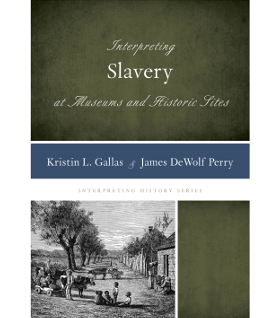
Public History: We seek to catalyze permanent change in how public history institutions interpret slavery for the public. We offer trainings and consultations for public history professionals at museums and historic sites, focusing both on content (for instance, that slavery built the nation, not just the South) and methodology (how to convey controversial history sensitively). We are convening a collaborative effort to create a guide of lessons from the field on Best Practices in Slavery Interpretation. We also conduct or facilitate ongoing historical research aimed at promoting a better understanding of the role of non-Southerners in slavery.

Faith-based: Congregations are fertile ground for heart-to-heart dialogue and for encouraging action around racial justice and reconciliation. Meanwhile, it is a sad reality that Sunday morning remains the most segregated time of the week.  Because the film has a religious/spiritual dimension, we seek to inspire people of faith to take further steps on their journeys towards racial healing.  We work with denominations as a whole, with regional entities such as dioceses, as well as with individual congregations by sharing the film, materials/guides, and speakers/facilitators for exploring church histories in connection with slavery, for dealing with the legacies of slavery, and for modern anti-slavery work.

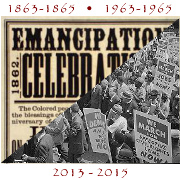
Civil War 150th: Recent screenings in the South have highlighted the need for more Northern white/Southern white dialogue given the cleavages that persist. We are using the sesquicentennial of the Civil War (2011-2015) for programming that addresses stereotypes of “Northern heroes” and “Southern villains.”  Our efforts will revolve around rebroadcasts of the film and “Big Watch” dialogue initiatives.

International work: To the extent that there is also a need within various European countries for national reckoning with the histories and legacies of their complicity in slavery, and to the extent that the impacts of this history are still felt in Africa, the Caribbean, and Latin America, we seek to support work in those regions as well.  For example, we have held powerful screening events in the Netherlands, South Africa, the Dominican Republic, and Cuba, as well as a national broadcast and dialogue initiative in Bermuda.


website:: james dew. perry | original website design:: laura mullen | original website development:: jake camara | tree illustration:: handcranked productions